
Whenever patients hear about Invisalign, it conjures up the image of completely smooth and transparent aligners. It is true, but not every patient can enjoy them that way. Sometimes, Invisalign patients need small and tooth-colored attachments to help aligners reposition teeth better.
In case your orthodontist proposes having Invisalign attachments for you, you have nothing to worry about. It is a common feature of many Invisalign treatment plans that helps get more accurate and predictable results.
This blog explains what Invisalign attachments are, why do you need them, how to apply them, and how to maintain them during your Invisalign treatment.
What Are Invisalign Attachments?
Invisalign attachments are small formations made of tooth-colored dental composite. They are bonded temporarily to specific teeth and are applied together with clear aligners throughout the entire treatment.
Imagine an attachment as a tiny handle that provides your aligner with additional grip to exert pressure in the needed direction.
Attachments can be round, rectangular, square, or some other specially designed shape. Their form, size, positioning, and amount depend on your tooth movements in your personal treatment plan.
Not all Invisalign patients need attachments, and even among those who need them, they can be required only on particular teeth.
Why Do You Need Invisalign Attachments?
An aligner can reposition a tooth itself, but some movements require additional assistance. Attachments help the aligner hold the tooth better and exert force in the desired direction.
Your orthodontist can prescribe them to help:
- rotate an improperly positioned tooth
- move the tooth slightly up or down
- close spaces between your teeth
- treat overcrowding
- correct the position of tooth roots
- perform bite correction
- make complicated movements more predictable
The decision to use attachments must be based on a comprehensive examination of your teeth, bite, jaw relationship, and treatment objectives.
Are Invisalign Attachments Visible?
Attachments are fabricated using materials that should match the natural color of your teeth. However, they can be somewhat visible whenever you smile, especially if they are attached to your front teeth. Here are the factors that affect their visibility:
- The amount of attachments you have
- The shape and size of attachments
- Their location in your mouth
- The natural color of your teeth
- Lighting and your distance
Attachments can slightly increase the visibility of your aligners, but Invisalign treatment remains a discreet treatment choice for many teenagers and adults.
How Are Invisalign Attachments Applied?
Attaching the attachments is normally easy.
Firstly, your teeth are thoroughly cleaned and prepared. A special template tray helps attach the tooth-colored composite to the right place. Then, it is hardened using a dental curing light. Finally, the template is carefully removed.
Your orthodontist checks each attachment to make sure that it is attached properly and that your aligners fit nicely.
The procedure does not include any drilling or injections. At first, you can feel the attachments with your tongue, but most people easily get used to them.
Do Invisalign Attachments Hurt?
Attachments themselves do not hurt. You can feel some pressure and discomfort while starting a new aligner because it moves your teeth.
The removal of aligners becomes a little harder with the presence of attachments because your aligners must fit tightly around them.
Any initial pressure usually passes as your mouth gets used to the attachments. If you experience persistent pain, sharp edges, damaged aligners, or other issues with attachments, contact your orthodontist.
Can You Eat as Usual with Invisalign Attachments?
Yes, normally you can. You remove your aligners to eat meals, thus, you can eat the foods you like.
Remove your aligners before eating or drinking anything except water. Brush your teeth and rinse them before putting the aligners back.
Despite the strong bonding, you must try to avoid behaviors that can damage your attachments, including:
- Biting into hard foods
- Chewing ice
- Using your teeth to open packets
- Biting pens and pencils
- Forcing your aligners out of your mouth
Your orthodontist can demonstrate the proper way to remove your aligners without straining your attachments.
How Should You Clean Your Teeth with Invisalign Attachments?
Attachments can become sources of plaque and food particles. Therefore, oral hygiene becomes even more important for your Invisalign treatment.
Daily maintenance recommendations:
Brushing
Brush your teeth properly using a soft-bristled toothbrush, paying more attention to edges of each attachment.
Flossing
Floss your teeth daily to remove plaque and food particles from between teeth.
Cleaning Your Teeth Before Putting Aligners Back
You should brush and rinse your teeth after eating and before putting your aligners back. Otherwise, food, sugar, and bacteria can remain between the enamel and aligners.
Taking Care of Your Aligners
Rinse and clean your aligners according to the instructions of your orthodontist. Try not to use too hot water since it can deform your aligner.
Regular Visits
Your progress, attachments, aligners fit, teeth, and gums are checked regularly during your treatment.
Can Invisalign Attachments Become Stained?
The composite material can absorb surface stains caused by poor hygiene or constant consumption of strongly-pigmented foods and drinks.
Tea, coffee, tobacco, and bright-colored foods can cause attachments becoming more visible over time. Here are the ways to prevent staining:
- removing your aligners before eating or drinking except water
- brushing your teeth after every meal
- rinsing your mouth after drinking colored beverages
- avoiding tobacco consumption
- keeping up with dental cleanings
Please do not try to polish or scrape your attachments yourselves. Contact your orthodontist if you suspect any stains on your attachments.
What Should You Do if the Attachment Gets Loosened or Detached?
Sometimes attachments may detach or become loose. It is normally not an emergency situation, but you must immediately contact your orthodontist.
Do not try to reattach your attachment yourself. Continue wearing your aligners until your orthodontist instructs you to do otherwise. Depending on the nature of your tooth movement, the attachment may need to be reapplied to maintain your treatment plan.
How Long Do Invisalign Attachments Remain on Your Teeth?
Depending on the complexity of your case, some attachments will remain on your teeth for the majority of your treatment period, whereas some others can be detached or substituted during particular phases.
The duration of your attachments depends on:
- the complexity of your case
- the movement of which teeth is needed
- phases of your treatment plan
- the response of your teeth
- your need for refinements aligners
Your orthodontist will monitor your progress and will determine when your attachments are not needed anymore.
How to Remove Invisalign Attachments?
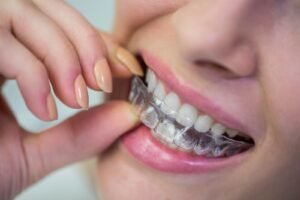
When they finish their work, your orthodontist removes the composite material and polishes the tooth surfaces. The procedure protects your natural enamel and is comfortable and does not require anesthetic shots.
Once the active phase of your tooth movements ends, you will still need retainers to maintain your newly positioned teeth.
Why Proper Treatment Planning Is Important
Invisalign treatment is not just about receiving a pack of clear aligners. You can achieve great results only by providing an accurate diagnosis, digital treatment planning, professional attachments, progress control, and cooperation of the patient.
Dr. Preeti Kulkarni is a Diamond Invisalign Provider in Thane with over 15 years of orthodontic practice. She uses the iTero Lumina intraoral scanner to take detailed digital images of your mouth and plan your Invisalign treatment.
During your consultation, we will examine your teeth, bite, face profile, and your treatment goals and prescribe a suitable plan.
Frequently Asked Questions
Do all Invisalign patients need attachments?
No. The necessity of attachments depends on the type and complexity of tooth movement required.
Are Invisalign attachments and braces the same thing?
No. Attachments are tiny formations made of tooth-colored composite working together with removable aligners. Braces consist of fixed brackets and wires.
Can I have attachments only on my back teeth?
It depends on your individual plan. Some patients have attachments on back teeth, while some others have attachments on front teeth as well.
Can Invisalign attachments damage my enamel?
Professional attachment and removal by your orthodontist guarantee the protection of your tooth surface if attachments are attached, monitored, and removed properly.
Can I whiten my teeth while wearing attachments?
Whitening during active Invisalign treatment can provide you with uneven results because the tooth beneath an attachment may behave differently. Consult your orthodontist regarding whitening time.
Can I detach attachments for a special occasion?
Repeated detachment and reattachment of attachments can interfere with your treatment. Consult your orthodontist regarding your intentions to remove attachments.
Book an Invisalign Consultation in Thane
Are you interested in Invisalign? Would you like to ask some questions about attachments, length of treatment, cost, and results? Book a personalized orthodontic consultation with Dr. Preeti Kulkarni.
